Fabric Tailor: A Bold Blackletter Font for Handmade Brands
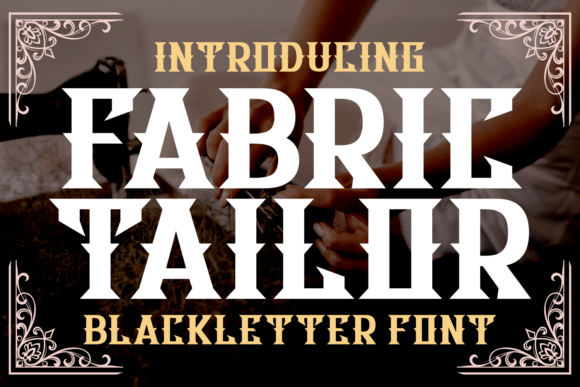
If you’ve ever held a hand-stamped candle label, hung a farmhouse-style welcome sign, or tucked a letterpress-style invitation into an envelope—you know how much weight the right font carries. Fabric Tailor isn’t just another blackletter font. It’s sharp, intentional, and quietly confident—like a well-sewn seam or a carefully embossed leather tag. With its tailored edges, ornamental flourishes, and vintage spirit, Fabric Tailor brings craftsmanship to the page before your customer even reads a word.
As someone who designs printable planners, cuts vinyl for boutique tags, and creates digital downloads for fellow small shop owners, I reach for Fabric Tailor when I need presence without pretension. It’s bold enough to command attention on a shelf or social post—but legible enough to hold up at 12pt on a product label or 8mm on a sticker cut. That balance is rare in blackletter fonts, which often lean too decorative or too dense for real-world use.
Where Fabric Tailor Shines in Physical & Digital Products
Fabric Tailor works beautifully across both physical and digital craft formats—especially where authenticity and tactile appeal matter:
- Candle & soap labels: Its strong vertical strokes and open counters keep text crisp even when printed small or foil-stamped on kraft paper.
- Wedding stationery: Use it for “Mr. & Mrs.” on invitations or monogrammed welcome boards—it nods to tradition without feeling stiff or outdated.
- Farmhouse signs & wall art: Pair with natural wood grain or linen textures; the ornamental details catch light and add depth without needing extra embellishment.
- Tote bags & mugs: Because it scales cleanly, Fabric Tailor holds up well in screen printing and sublimation—no blurring, no loss of definition.
- Digital printables: Planner headers, quote pages, and seasonal SVG bundles gain instant character when set in Fabric Tailor—especially paired with subtle line art or botanical elements.
I’ve used it for holiday packaging labels on handmade hot cocoa mixes—its contrast between thick and thin strokes makes “Spiced Cocoa” look warm and inviting, not cold or gothic. And for a client’s artisanal cheese brand? We used Fabric Tailor for the wheel stamp and matching jar tags. Customers told us the packaging “felt like it had history”—even though the business launched that spring.
Readability Meets Real-World Production
Let’s be honest: many blackletter fonts crumble at small sizes or get tangled in cutting machines. Fabric Tailor avoids those pitfalls. Its generous x-height and carefully spaced letters mean clean cuts in Cricut Design Space and Silhouette Studio—even at 0.25 inches tall. No overlapping paths. No uncut inner counters (looking at you, lowercase “e” and “a”).
For printed cards or stickers, I recommend using it at 14pt minimum for body text—but it truly sings as a display font: headlines, titles, names, and short phrases. Avoid long paragraphs. This isn’t a serif font for novels—it’s a premium font for moments that need emphasis, warmth, and intention.
Smart Pairings That Elevate Your Designs
Fabric Tailor thrives alongside thoughtful companions. Think of it as the statement jacket in your font wardrobe—not meant to go solo, but to anchor a balanced outfit:
- With a soft script font: Try pairing Fabric Tailor headlines with a relaxed, slightly bouncy script for names or quotes—like “Est. 2023” in Fabric Tailor above “Hand-Poured Soy Candles” in a gentle handwritten style.
- With a clean sans serif: For ingredient lists, care instructions, or pricing, switch to a neutral sans like Montserrat or Poppins. The contrast feels modern yet grounded.
- With a quiet serif: If your brand leans heritage or literary, pair Fabric Tailor with a classic serif like Playfair Display—just keep sizing and weight intentional so neither overpowers.
Always test pairings at actual output size. What looks harmonious on screen may shift dramatically when printed on recycled cardstock or cut from matte vinyl.
Licensing, Files & Practical Details
Fabric Tailor comes with OpenType features—including stylistic alternates, ligatures, and swashes—that let you fine-tune charm without switching fonts. You’ll find .OTF and .TTF files, plus web-ready WOFF versions if you’re building a shop site or digital product preview page. Multilingual support covers Western European languages, making it viable for shops selling internationally—or simply aiming for polished consistency.
Crucially, Fabric Tailor includes a commercial license. That means you can use it in client work, sell SVG files containing Fabric Tailor lettering, embed it in editable Canva templates, and print it on merchandise you sell—no extra fees or attribution required. Just keep your license file handy for peace of mind.
A Typeface That Supports Your Brand Story
Your font choice isn’t decoration—it’s part of your brand’s first impression, its texture, its voice. Fabric Tailor doesn’t shout. It stands with quiet authority. It says “handmade,” “thoughtful,” and “timeless” before a single word is read. Whether you’re designing a limited-run greeting card series or scaling up a label system for wholesale, this blackletter font gives your products visual cohesion and emotional resonance.
It’s become my go-to for anything that needs to feel rooted—yet fresh. Not nostalgic, but *knowing*. Not flashy, but memorable. And most importantly—not generic, but unmistakably yours.